
Upgrading from TRNG to QRNG: What Changes and Why It Matters
True random number generators were a significant improvement over pseudorandom algorithms. They draw randomness from physical processes rather than mathematical formulas, producing output that is genuinely unpredictable. For many years they were the standard for high-security randomness generation.
Quantum random number generators take a different approach, and understanding the distinction is useful for anyone evaluating randomness solutions for security-critical systems.
How TRNGs work
TRNGs generate randomness by measuring physical processes such as thermal noise, electronic fluctuations, or atmospheric noise. Because these processes are physical rather than algorithmic, the output is not deterministic and cannot be reproduced from a seed value.
This makes TRNGs genuinely random in a way that PRNGs are not.
Where TRNGs have limitations
Despite their advantages over PRNGs, TRNGs have practical constraints:
- physical noise sources can be influenced by environmental factors such as electromagnetic interference, introducing subtle bias into the output
- output speed is limited by the rate at which physical events can be measured and processed
- validating the quality of TRNG output requires ongoing testing, which adds operational overhead
- classical physical processes do not carry the same theoretical unpredictability guarantees as quantum processes
For many standard applications these limitations are manageable. For high-security or high-throughput environments they become more significant.
How QRNG differs
Quantum random number generators derive randomness from quantum physical processes rather than classical physical noise. The key distinction is theoretical.
In classical physics, physical processes are in principle predictable given sufficient information. In quantum mechanics, certain outcomes are fundamentally indeterminate until the moment of measurement. No amount of prior knowledge or computational power can predict the result.
Common quantum sources include photon behaviour at beam splitters, quantum vacuum fluctuations, and phase noise from quantum optical systems. These sources produce randomness that is not merely difficult to predict but physically impossible to predict.
Additional practical advantages of QRNG over TRNG include:
better suitability for compliance and certification requirements
higher output speeds achievable through photonic implementations
stronger theoretical basis for unpredictability
real-time health monitoring to verify output quality before it is served
When upgrading from TRNG to QRNG makes sense
The upgrade is most relevant when:
- the security model requires certifiable randomness with a strong theoretical basis
- output speed or throughput is a constraint with current hardware
- regulatory or compliance requirements specify entropy quality standards
- the system is part of a broader quantum-safe security architecture
- long-term key security is a priority given advancing quantum computing capabilities
For applications already well-served by a robust TRNG implementation, the case for immediate upgrade depends on the specific threat model and compliance context.
Practical considerations for transition
Moving from TRNG to QRNG involves evaluating:
- integration requirements for your existing systems
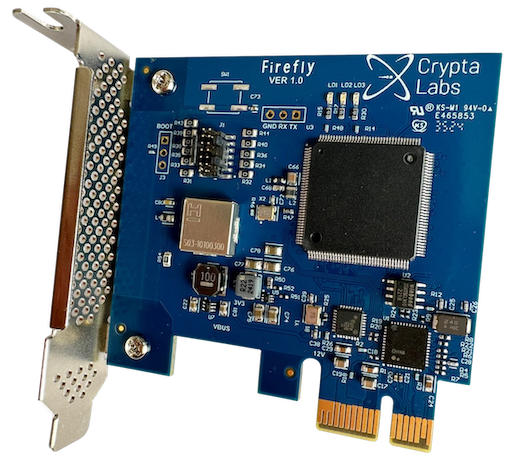
- form factor needs, from embedded and USB implementations to PCIe and OEM designs
- output rate requirements
- health monitoring and certification needs
To understand the broader context, read: What Is a Quantum Random Number Generator?
For QRNG hardware options and OEM integration, visit cryptalabs.com